Friday, February 9, 2018

Negative Soccer, or What's Wrong with Mourinho's Bus?


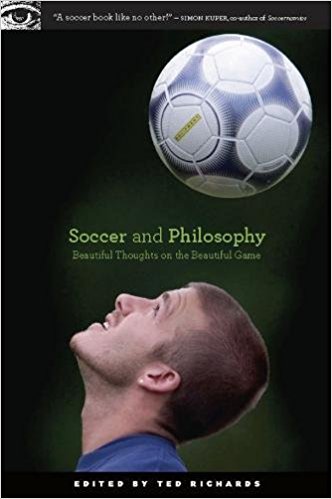
I'm team-teaching a course in our Honors Program this semester, "The Philosophy & Politics of Soccer." We cover a lot of different issues, but recently we discussed the morality of negative soccer vs. playing beautifully, using two chapters from Soccer and Philosophy: Beautiful Thoughts on the Beautiful Game, edited by Ted Richards.

Consider the different approaches of Jose Mourinho and Arsene Wenger. Here are Mourinho's 7 Winning Principles:

1. The game is won by the team who commits fewer errors.
2. Football favours whoever provokes more errors in the opposition.
3. Away from home, instead of trying to be superior to the opposition, it’s better to encourage their mistakes.
4. Whoever has the ball is more likely to make a mistake.
5. Whoever renounces possession reduces the possibility of making a mistake.
6. Whoever has the ball has fear.
7. Whoever does not have it is thereby stronger.

In contrast to this, in John Cross's biography of Arsene Wenger, Arsenal's manager is quoted as follows:
“Let’s not forget you can win and lose playing with different styles. I believe the big clubs have a responsibility to win—but also to win with style. I believe our sport has moved forward a lot on the physical side, tactical side but we must not forget the values that it carries through the generations. One of them is the vibe coming out of team going into the stand…I always like to think that the guy who wakes up in the morning after a hard week of work has that moment, that fraction of a second, when he opens his eyes and says: “Oh, today I go to watch my team.” I like to think it makes him happy, he thinks he can maybe see something special. We can’t guarantee that, but we have to try…It’s amazing the effect you can have on people’s lives" (p. xi).
 So what's wrong with negative soccer? According to Stephen Minister in Soccer and Philosophy, it involves an entire team giving up on the pursuit of excellence. Parking the bus, getting stuck in, and taking no risks eliminates or greatly reduces a lot of what is beautiful about the sport. Players and teams are inhibited from freely expressing their creativity.

While I prefer attacking football to parking the bus, I think more can be said in defense of negative tactics. For example, it takes great skill and patience, as well as discipline, to play a defensive game well. Excellence can be demonstrated by neutralizing a team with great attackers. And surely there is something of beauty and excellence in a lethal counterattack. So while at the end of the day I agree with Wenger and Minister, I think more can be said for the excellence on display when a soccer team uses negative tactics.

Thursday, January 11, 2018

Notice: Sport and the Politics of In/Equality

Readers might be interested in this Research Topic: 'Sport and the Politics of In/Equality' in the journal, Frontiers in Sociology.

It is open for submissions until April 27. More on the journal's Research Topics.

This topic is run by Andy Smith of Edghill University, and Elizabeth Pike of the University of Hertfordshire.

Monday, July 17, 2017

CFP: Special Issue on "Bernard Suits' Legacy: New Inspirations and Interpretations"

A Call for Papers for a special issue of Sport, Ethics and Philosophy is out. The topic: “Bernard Suits’ Legacy: New Inspirations and Interpretations.”

The editors of the special issue: Filip Kobiela, José Luis Pérez Triviño, and Francisco Javier López Frías

The special issue is dedicated to philosophical and moral questions related to Bernard Suit’s legacy.
  • Abstract submission deadline: October 30, 2017
  • Notification of abstract acceptance: November 30, 2017
  • Full manuscript submission deadline: May 30, 2018
  • Publication: End of 2018/Early 2019
For more information and details, including possible topics and submission instructions: http://philosophyofsport.eu/sport-ethics-and-philosophy-special-issue-bernard-suits-legacy-new-inspirations-and-interpretations/

Monday, May 29, 2017

Announcing: Examined Sport podcast

Some readers may have been familiar with my old Sports Ethics Show podcast. That podcast has been on hiatus for far too long. Instead of just starting that back up again, I am relaunching it with a new name, Examined Sport, and a new concept. You can read more about the new concept over at SportsEthicist.com.

The first episode is, logically, on Bernard Suits classic article: “What is a Game?” It will be released Tuesday, May 30. Episodes will follow every week or two after that.

You can subscribe to the podcast on iTunes. You can also watch each episode on The Sports Ethicist YouTube channel.

Tuesday, May 16, 2017

New Book: Golf As Meaningful Play: A Philosophical Guide

I am pleased to announce the publication of a new book in the Studies in Philosophy of Sport series from Lexington Books:

Golf As Meaningful Play: A Philosophical Guide by W. Thomas Schmid.
Golf as Meaningful Play offers a philosophical introduction to golf as a sporting practice and source of personal meaning. It is intended both for scholars interested in the philosophy of sport, and for intellectually curious golfers who seek a better understanding of the game. This book describes the physical, emotional, mental, and ethical aspects of the game and how they influence golf instruction.
It looks at golf as play, game, sport, and spectacle, discusses golf’s heroes, communities, and traditions, and analyzes the role of the virtues in golf, linking them to self-fulfillment, the ultimate good of golf experience. The book concludes with discussions of classic works of golf literary and film art, including Caddyshack, Missing Links, Tin Cup, and Golf in the Kingdom, which celebrate its follies and glories. 
The fact that golf can serve as a playful laboratory to test oneself is a deep part of the game’s attraction. Golf, if played well, conveys an experience which unites happiness, excellence, and interpersonal flourishing. This book strives to give an account of golf both as it is and as it ought to be—how golfers may improve their games and even themselves, in meaningful play.
Available at Amazon, Lexington, and other book sellers.